|
|
|
| |
| |
👋 Good morning. We wonnnnn! Lemme give you the backstory. The World Cup kicked off yesterday with Mexico vs South Africa in the very first match, and Africans around the world — me very much included, I'm not mature — rallied behind Mexico because we all wanted South Africa to lose. And lose they did, 2-nil. Why the joy? If you know, you know. Meanwhile, have you heard Dai Dai by Shakira and Burna Boy? It's the official anthem for the 2026 FIFA World Cup. there's something here for everyone. As always, be sure to scroll to the end; there’s something here for everyone. |
In this edition: this week in pop culture, the gele as a fashion statement, what to know before watching blood sisters, and more. |
If you’re enjoying this, don’t forget to subscribe and join The Juice community. We’re building this together ♡. |
 |
Shalom Tewobola,
Editor.
|
|
|
|
|
| |
|
|
| |
| |
Phrase of the week |
Bafana Bafana, how far na |
Meaning at the bottom of this newsletter |
|
|
|
| |
|
|
| |
| |
🗞️ THIS WEEK IN POP CULTURE |
|
|
🎵 MUSIC |
Ayra Starr's rollout has been nothing short of a vibe. With a Tiny Desk slot, a sit-down on Chinasa Anukam's Is This Seat Taken, and now the main course: Tornado is out today, teased with our sabi girl swirling in a purple storm. |
|
|
👗 FASHION |
African designers are taking over Paris. From 17 June to 8 July, "Africa Now" lands at Galeries Lafayette Haussmann, putting four designers backed by CANEX Presents Africa right in the heart of one of Paris's biggest retail spaces. |
|
|
📚 LITERATURE |
Third time's the charm? After two false starts, Chimamanda Adichie's Americanah finally looks set for the screen, this time with Canal+ at the wheel. We've had our hopes raised before, so we're cautiously excited—but excited nonetheless. |
|
|
📽️ FILM |
The results of Kemi Adetiba's online auditions (the ones that broke the internet) are in. The director's keeping it under wraps, but she let slip that two of the discovered actors are flying out next week for a massive production. We didn’t particularly enjoy the process, but we love to see it. |
|
|
🏛️ POLITICS |
Nigeria marks its 27th Democracy Day today, and the mood is less celebration, more reflection. Twenty-seven years in, same ghosts: insecurity, a punishing economy, and leaders treating our patience as infinite. |
|
|
|
| |
|
|
|
| |
| |
POLL |
Help us know who we're really talking to so we can make The Juice better for you. Takes two seconds, and it's totally anonymous! |
What's your age range? |
|
|
|
|
|
| |
|
|
| |
| |
MAIN SQUEEZE |
Who owns the gele? |
A few days ago, Ayra Starr tied a gele to the club while promoting her upcoming album, Starr Girl. Somehow, this sparked a fight — artists came out of the woodwork claiming they weren't credited for starting the trend of wearing gele to the club. |
Now, a gele, being a piece of Yoruba culture, cannot be owned or stolen. But in a scramble for visibility, an "I wore it first" battle erupted online anyway. |
The more interesting conversation, though, is the steady migration of our traditional wear into modern, everyday spaces. It's been happening for a while, women rocking iro and buba to the club, Oleku making its comeback, and honestly, it keeps our culture alive. |
We spoke with artist and style observer Chigozie Obi to hear her thoughts on the matter. She talks about the versatility of geles and makes a case between creating an idea and repopularizing an already established idea. |
Ayra Starr recently tied a gele to attend a club. Is that disrespecting the symbol, or just freeing it from always having to mean something? |
I don’t think it’s disrespectful or a big deal to be honest, because she’s Nigerian and Yoruba, it’s her culture. I also didn’t see it as a statement per se, it was just a fun fashion moment to me. |
I’m a fan of the gele trend, it’s versatile styling that slays while preserving and merging traditional cultural pieces with modern outfits/times, that’s a good thing to me. |
Some artists have come out to say Ayra took the gele idea from them. But can anyone actually own a piece of culture? |
I actually didn’t know there was a back and forth going on. I just knew the trend was happening, but with most trends, nothing is new under the sun, and I don’t think this will be the first time people are wearing geles with non-traditional outfits. |
If the trend has resurfaced, does it mean the people who brought it back are now stealing the idea from the original creators? I think a lot of everything comes down to inspiration and giving credit, or more regarding the incident where it’s due, there’s also a difference between creating an idea and (re) popularizing an already established trend/idea. |
Does it land differently when a Western brand reinterprets aso-oke versus when one of our own wears it casually? And if so, why? |
I don’t really connect with western brands recreating aso oke pieces. I prefer cultural Nigerian/ African pieces worn and created by our own people because it’s simply ours, that’s more significant to me. |
Where's the line between evolution and erosion, or is the idea of a right way to wear your own culture the actual problem? |
I think certain cultural outfits are more sacred and can be upheld in that way/should not be disrespected unless necessary cause I believe not all cultures should be preserved/upheld/respected, but then it’s not a big deal to play around with traditional clothing with this in mind, in my opinion. |
I love the merging of traditional clothing with modern times/clothing and upholding culture in that way. People can be quite strict when thinking about this, but times change, and a good way to keep culture alive is by having an open mind, infusing it into the current and adjusting with it. |
Also, this is what fashion is: it’s exploration, it’s fun, it’s mixing and matching, it’s a lot of everything. People can and should be more open-minded about it. |
If ceremonial wear becomes everyday, what does the next generation reach for when they actually want to mark a moment? |
I don’t think making ceremonial wear casual takes anything away from the future generations marking their moments. If an outfit is fire and significant, it’s gonna be that regardless, the idea of this is just a non-factor to me, honestly. |
The good thing is new outfits can be made, so if they’re searching, that’s a possible solution, expand culture by creating new things. |
|
|
|
| |
|
|
|
| |
| |
🔪 THE PEEL |
|
|
Blood Sisters is back, and we're already stressed |
Released on May 5, 2022, Blood Sisters landed on Netflix and got marketed as the platform's first Nigerian original series — a title Kemi Adetiba's King of Boys: The Return of the King had already worn since 2021. We'll let them fight over the crown. |
What's not in dispute: produced by Mo Abudu's EbonyLife Studios and directed by Biyi Bandele and Kenneth Gyang, the thriller followed two best friends, Sarah (Ini Dima-Okojie) and Kemi (Nancy Isime), who commit a murder, fumble the cover-up, and run for their lives. |
Four years later, Blood Sisters 2 arrived on June 5, and it has people talking, this time under the direction of Kayode Kasum and Daniel Oriahi. Some say it should have quit while it was ahead at Season 1; others swear the prison scenes borrow a little too freely from Orange Is the New Black; and a few have taken issue with how it frames homosexual relationships. |
So before you dive in, here are a few things you should know: |
The OG sisters are back |
Ini Dima-Okojie and Nancy Isime reprise their roles as Sarah and Kemi, alongside returning stars Kate Henshaw and Daniel Etim Effiong. Genoveva Umeh, Uche Jombo, and Kehinde Bankole also return, and the ensemble has expanded once more. |
New cast additions include Michelle Dede, Gabriel Afolayan, Warri Pikin, and Bolaji Ogunmola. Proof that, in Nollywood, the guest list only ever grows. |
The story picks up in the aftermath |
The first season ended on a cliffhanger that left the Ademola dynasty reeling. Season 2 digs into the fallout, with the Ademola family seeking revenge and the law closing in, testing Sarah and Kemi's bond like never before. |
The Ademolas have money, lawyers, and a body to avenge, and they're not the forgiving type. |
The themes still cut deep |
Beneath the thriller packaging, the show has always been about something more. Season 1's drama grew out of an abusive relationship, police pursuit, family power struggles, blackmail and betrayal, examining friendship under pressure, domestic violence, and class dynamics. |
Season 2 keeps that spine, dragging its women through the machinery of power and asking, again, who Lagos actually protects. |
A new directing team takes the wheel |
A bittersweet handover: where Season 1 was helmed by the late Biyi Bandele-Thomas and Kenneth Gyang, Season 2 is steered by Kayode Kasum and Daniel Emeke Oriahi, with the production executive produced by Mo Abudu under EbonyLife Studios. |
It's a global drop |
The season is available worldwide, but it lands amid a real industry tension: several recent Nigerian Netflix titles have been geo-locked to African territories, sparking debate about access and revenue distribution. |
That Blood Sisters gets a worldwide release is a reminder of Netflix's earlier Nollywood ambitions, even as the platform takes a more measured approach now. |
|
|
|
| |
|
|
|
| |
| |
🎵 PRESSED BY THE JUICE |
|
|
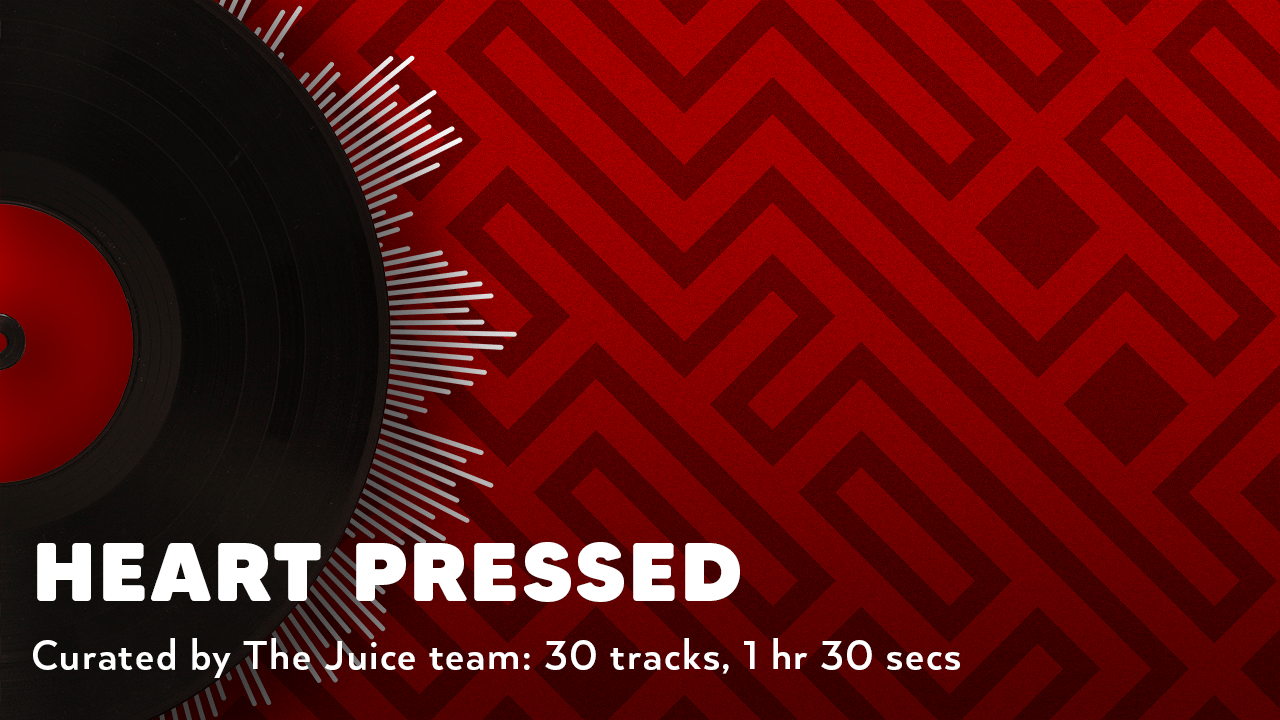
Love can save the world, at least we hope it saves Nigeria. You can start the process by listening to our playlist, guaranteed to melt even the stony-hearted. |
Don’t forget to save, we update frequently. |
Do you have a song you’d like us to include? Put us on, reply to this mail, thejuice@pulse.ng |
|
|
|
|
|
| |
|
|
|
| |
| |
PHRASE OF THE DAY |
South Africa's men's national football team goes by Bafana Bafana, which means "the boys" in Zulu. |
|
|
|
| |
|
|
|
FRESH STATS |
6 Nigeria has qualified for the World Cup six times. |
|
|
|
|
|
Today’s email was brought to you by Shalom Tewobola. Designs by: Daniel Banjoko |
|