|
|
|
| |
| |
👋 Good morning. Seyi Makinde, Governor of Oyo State, has declared his candidacy for the 2027 presidential election. Two weeks ago, I asked who you'd be voting for — well, there's a new name on the table, so I thought I’d let you know. Let’s get into it ⬇️ |
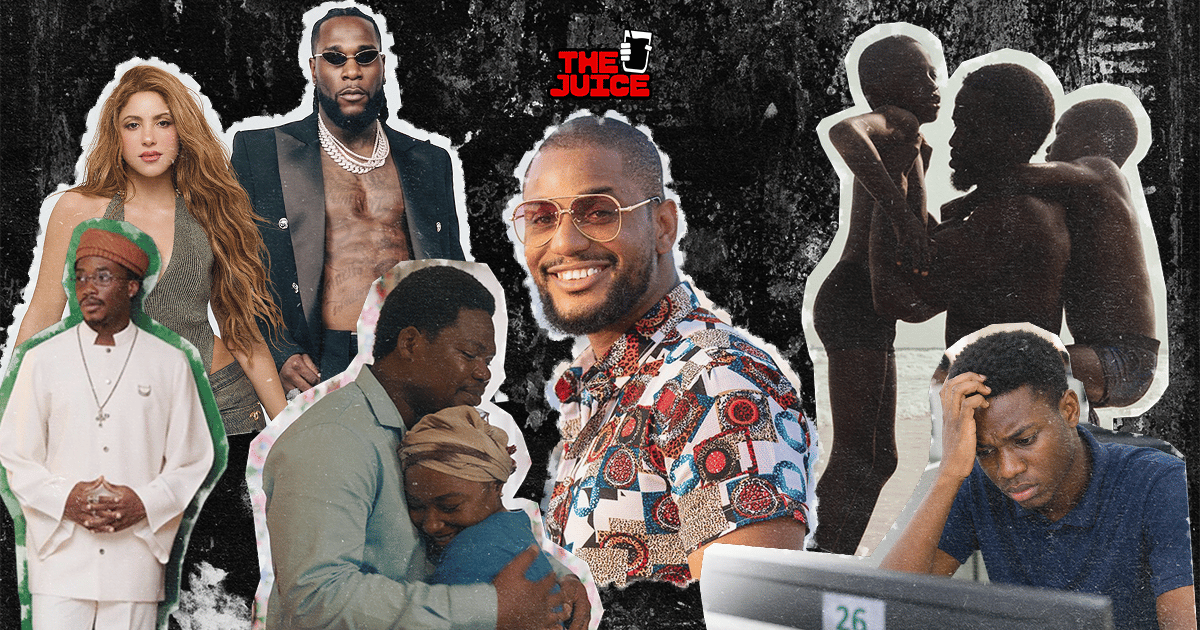
In this edition: we look at what JAMB’s new cutoff says about the Nigerian education system, Nollywood’s evolution at the AMVCA, running through anxiety, this week in pop culture, and more. |
If you’re enjoying this, don’t forget to subscribe and join The Juice community. We’re building this together ♡. |
 |
Shalom Tewobola,
Editor.
|
|
|
|
|
| |
|
|
| |
| |
Quick Question |
What’s the first Nigerian animation produced by Disney? |
Answer at the bottom of this newsletter |
|
|
|
| |
|
|
| |
| |
🗞️ THIS WEEK IN POP CULTURE |
|
|
🎵 MUSIC |
Shakira is once again delivering the official song for the World Cup. This time, she enlisted our very own African Giant, Burna Boy, on the track called Dai Dai. His bad behaviour aside, he is really that guy. |
|
|
📚 LITERATURE |
Chigozie Obioma is a producer on Call of My Life. He has mentioned wanting to do something in Nigerian cinema for a while, so this is his first step, and we applaud it! It seems like Nollywood and the Nigerian literature space are hinged on deepening their ties. |
|
|
🌟 CELEBRITY |
Veekee James welcomed her first child, a bouncing baby girl. By the way, does anybody know why they call babies 'bouncing'? She is named Eliana Adeife Atere, a beautiful name for an even more beautiful baby. |
|
|
📽️ FILM |
We lost Alex Ekubo during the week. He will fondly be remembered as one of Nollywood’s lover boys. We are grateful he left us with one last memorable performance in Afamefuna: An Nwa Boy Story. |
|
|
↝ TRENDING |
Call of My Life, Dammy Twitch’s debut feature film, starring Uzoamaka Power and Andrew Bunting in leading roles, has been the talk of the town. We are better than you because we have already seen it, and it is indeed worth raving about. We are really looking to see what Dammy Twitch injects into the industry. |
|
|
|
| |
|
|
|
| |
| |
MAIN SQUEEZE |
What does the new JAMB cut-off say about Nigeria’s education system? |
As Nigeria grapples with deepening concerns around educational quality and access, the recent decision by the Joint Admissions and Matriculation Board (JAMB) to lower the minimum admission cutoff mark to 150 has sparked widespread debate. |
While some see the move as an attempt to widen access to tertiary education, others argue that it reflects a troubling decline in academic standards at a time when the country’s education system is already under strain. |
In this conversation, Oluwateniola Alabi, founder of The Literacy Bridge Initiative, shares her thoughts on what the policy could mean for the future of education, merit, and national development in Nigeria. |
What does lowering the JAMB cutoff mark to 150 say about how Nigeria currently values academic standards and higher education? |
Lowering the cutoff is a clear indication that we do not value excellence as a nation, and this is reflected in every sector. It shows that we are not future-forward as a nation, and I fear for how the next couple of years will look like. |
Our graduates will not be able to compete with their counterparts in any other country in the world, we will experience a decline in creativity and innovation because our graduates are not capable of critical thinking. The world is changing fast, yet we are enacting policies that are setting us back as a nation. |
Is this shift an attempt to expand access to tertiary education, or does it signal a decline in the quality threshold for admission? |
While I understand that this policy came up in an attempt to expand access to tertiary education, it is counterproductive to do that at the expense of quality education. |
As of 2025, Nigeria's world competitiveness index score dropped to 39.70, one of the lowest globally. Lowering entry standards for future educators and into our tertiary institutions is highly unlikely to reverse this trend. |
What long-term impact could a lower cutoff have on students’ preparedness and the overall performance of universities in Nigeria? |
The long term impact is students not valuing education, not understanding the rigour that comes with excellence, we will churn out graduates who are "schooled" but not educated. The talent drain will be cataclysmic. |
Does this decision reflect a structural problem in the education system? |
I think it does, it also reflects the structural problem with our education system as a whole, starting with early childhood education up until university education. |
The foundation is faulty, we already have a learning poverty problem with children between the ages of 6 and 10 unable to read and solve simple sums. The system needs a complete overhaul. We first need to prioritise foundational education and then build on it. |
In your view, is this policy ultimately a step toward educational inclusion or a compromise that risks devaluing merit and certification? |
This policy is a compromise, a compromise we cannot even afford to make. Education is pivotal to every significant bit of progress we want to see in Nigeria. We cannot tackle learning poverty by lowering the bar. |
We cannot afford to drop the standard in the name of inclusion, we are sitting on a time bomb. |
|
|
|
| |
|
|
|
| |
| |
🔪 THE PEEL |
|
|
Nollywood is ready for arthouse films |
The AMVCA held its 12th edition last weekend, and the ceremony came with surprises and milestones. |
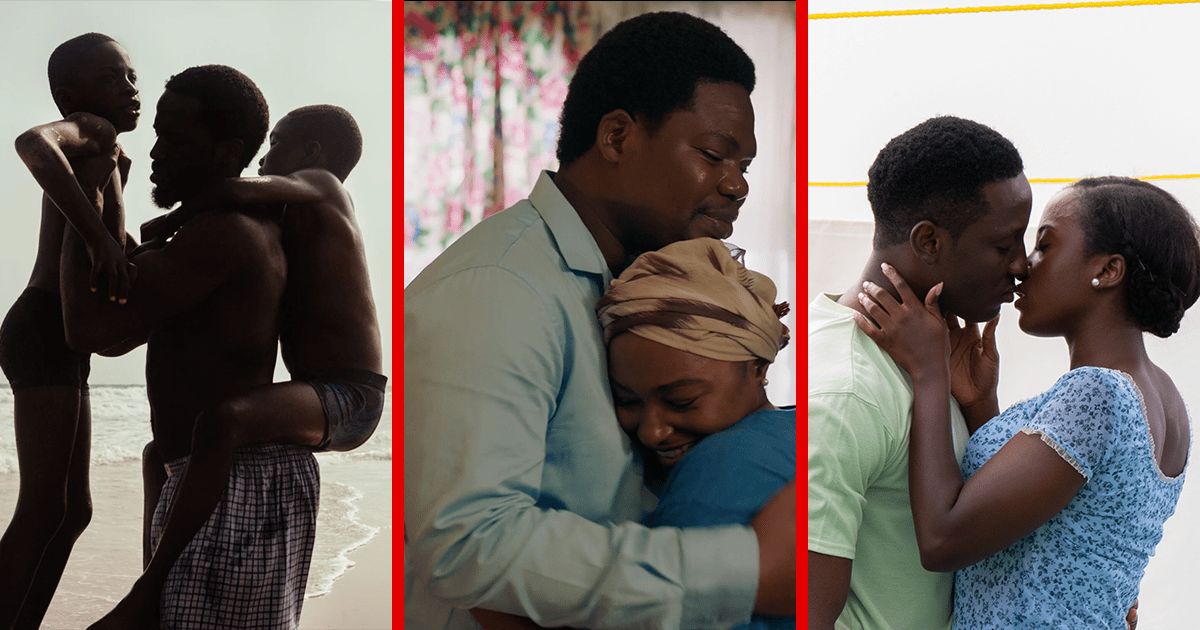
The biggest milestone of the night was Linda Ejiofor snagging the award for both best lead and supporting actress. And the surprise being My Father’s Shadow taking home best director and best movie at the AMVCA. |
I had predicted their loss in these categories, but looking at last year’s best movie, Freedom Way, and the year before that, Breath of Life, and this year, all arthouse films, maybe I was too fast to judge. And I’m left with a question: is Nollywood opening its arms to Arthouse? |
|
|
|
| |
|
| |
| |
Peeling it back |
The AMVCAs, like Nollywood, tend to favour the populist movies, mainstream movies over art house films, which is quite something when you realise that the first film awarded with an AMVCA was Sara Bleecher’s Otelo Burning, an indie art house film. |
It is set in apartheid, where a young boy finds freedom through surfing but is pulled into political violence and loyalty conflicts that threaten everything he’s escaped to. But before I go ahead, let me quickly explain what an arthouse film is, so we are not lost. |
What is arthouse? |
Simply put, an arthouse film is a type of cinema that prioritises artistic expression and ideas over mainstream commercial appeal. It often explores politics, human emotions, identity, and social conditions in a reflective or layered way, rather than focusing on straightforward entertainment. |
These films are usually shown at festivals or indie cinemas instead of being made for mass commercial success. These are also the type of films that go on to win Oscars and are heralded in international film communities. |
Nollywood has always made films for commercial appeal. It is its irrevocable love for the box office that led to the creation of the Surreal16 Collective, helmed by Mike Omonua, CJ Obasi, and Abba T. Makama. This group also hosts the S16 Film Festival, an arthouse film festival. They wanted to highlight filmmakers working outside mainstream Nollywood, the independent filmmakers. |
|
|
|
| |
|
| |
| |
Another layer |
Arthouse is the home of independent cinema. Filmmakers who choose the arthouse route struggle with funding. Nollywood is an industry whose lust for box office returns takes precedence over everything, which makes sense when you do as much as glance at the economy. |
But their lust acts as a blockage for these kinds of films. So financiers and producers are wary of placing bets on these arthouse films, and the filmmakers are left to scramble for them. |
And because Nollywood has trained its audience to mostly expect blockbusters from it, a large chunk of the audience is not interested in arthouse films. So only a few people go out to see and support these arthouse films. |
What does the AMVCA taking an interest in arthouse mean? |
The AMVCA is the biggest award in Nollywood, so it has authority and can harness its influence. |
Award ceremonies tend to introduce audiences to new films. By batting their eyelashes at arthouse films, they are saying these films have a place in our cinema too, and, in doing so, audiences are influenced to watch them. |
Awards are not only for prestige; they also go into producers’ pitch decks. If an award body finds you credible enough, then financiers can bank on you. Maybe not for the local audiences, but for the international ones. |
|
|
|
| |
|
| |
| |
The core |
My Father’s Shadow had had quite the historic run. First Nigerian film at Cannes, BAFTAs on their shelves, and now the AMVCA. Nothing is better than being honoured by your own. |
For a long time, it felt like Nollywood only had room for populist cinema, but with My Father’s Shadow winning, it is safe to say Nollywood is expanding its palate, and we can’t wait to see what that brings. |
|
|
|
| |
|
|
|
| |
| |
🎵 PRESSED BY THE JUICE |
|
|
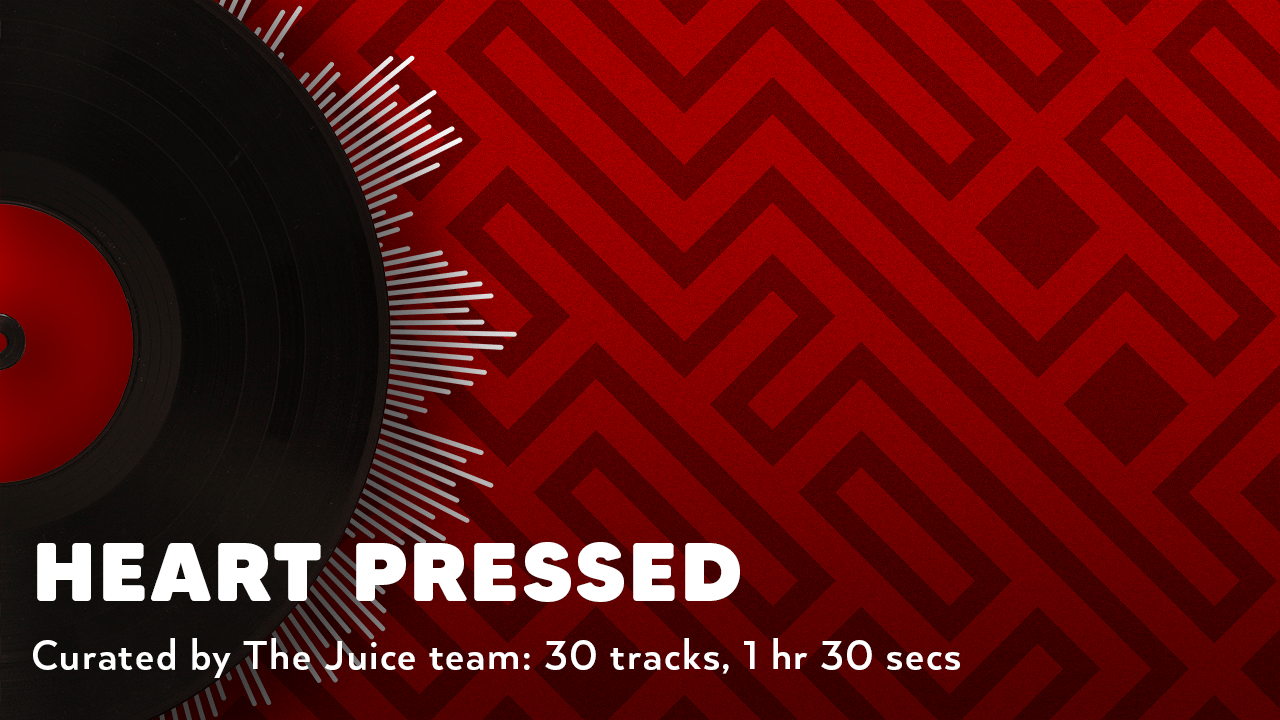
Since everybody is talking about the romcom Call of My Life, we present you with the playlist of our lives. The songs here will make you grin and giggle. We’ve got Dwin the Stoic, Somi, Tems, and so many more. |
Don’t forget to save, we update frequently. |
Interested in guest curating? Reply to our mail, thejuice@pulse.ng |
|
|
|
|
|
| |
|
|
|
| |
| |
🏃💨 ON THE RUN |
|
|
Has running helped with anxiety, or made it more complicated? |
"Both, honestly. Running hasn't made the anxiety disappear. But I'm doing something I genuinely enjoy without most of the factors that usually trigger me, like loud noise, overstimulation, and enclosed spaces. |
Running is open. I can breathe. I can take time to settle inside my body, which you don't get at a concert or a crowded event. So it's like: okay, I'm doing this thing I thought I couldn't do. That's something. |
With more people coming to run clubs, I do sometimes see people I was hoping to avoid. And that's its own thing to navigate. But you see people you don't want to see everywhere. You just keep moving.” - Jojo |
"Running Through It" is an ongoing series on anxiety in running, and running through anxiety, featuring personal stories, community voices, and conversations with professionals. |
|
|
|
| |
|
|
|
| |
| |
THIS WEEK’S POLL |
What's the first Nigerian animation produced by Disney? |
|
|
|
|
|
| |
|
|
|
FRESH STATS |
52% 52% of Nigerian toddlers are off track developmentally. |
|
|
|
|
|
Today’s email was brought to you by Shalom Tewobola and Praise Okeoghene Vandeh. Editing by: Shalom Tewobola. Designs by: Daniel Banjoko |
|