|
|
|
| |
| |
👋 Good morning. I have a question: if you were a music artist with money to spare and access to good talent, would you use it, or would you settle for sloppy AI prompts? Asking because Qing Madi, Bnxn, and Victony just dropped a new song called Come Slide, and the cover art is an AI-generated image of the three of them standing in front of a fake bluish waterfall surrounded by fake nature. And I have feelings about it. What do you guys think about AI art, truly? Let me know. |
In this edition: we look at how book influencers navigate their jobs, Nollywood’s cinema culture evolution, this week in pop culture, and more. |
If you’re enjoying this, don’t forget to subscribe and join The Juice community. We’re building this together ♡. |
 |
Shalom Tewobola,
Editor.
|
|
|
|
|
| |
|
|
| |
| |
Quick Question |
What was Chimamanda Adichie’s first novel? |
Answer at the bottom of this newsletter |
|
|
|
| |
|
|
| |
| |
🗞️ THIS WEEK IN POP CULTURE |
|
|
🎵 MUSIC |
Ckay’s “yansh” proclaiming teaser for his song African Girls has people wondering what’s happening in the Nigerian music scene. He started off as a lover boy; somebody needs to speak to his manager. |
|
|
📚 LITERATURE |
Nikki May’s book Wahala is being adapted by the BBC. And guess who’s starring in it? Genevieve Nnaji! Yes, she’s making her comeback on screen. While she’s at it, she should please give us an update on I Do Not Come To You Chance. |
|
|
🌟 CELEBRITY |
May is truly the month of mothers. Sharon Oja joined the Nollywood mothers’ club this week by announcing with stunning maternity photos the birth of her daughter. |
|
|
📽️ FILM |
Call of My Life topped the box office this week with an opening of N78 million. Amazing achievement for a film without celebrities and outside the holiday period. It even beat Michael and The Devil Wears Prada. |
|
|
↝ TRENDING |
The police arrested Nigerian Minister Saleh Mamman. The minister went into hiding after he was given a 75-year corruption sentence. For once, the police did the right thing! |
|
|
|
| |
|
|
|
| |
| |
|
|
Many are already using Pulse’s editorials and socials to grow their businesses and tell their stories to more than 5 million people. Just saying. Oh, and did I mention it only takes you one click? |
|
|
|
| |
|
|
| |
| |
MAIN SQUEEZE |
Book influencing made reading cool again |
As usual, X remains one of the internet’s biggest breeding grounds for culture, discourse, and public opinion. |
This week, one conversation that found its way into the centre of online debate was the place of book influencers within the literary ecosystem and whether their growing influence has come at the expense of literary criticism. |
The conversation was sparked by an X user who wrote: “Nigerian publishers didn’t know the level of disservice they were doing to the literary industry in general when they consigned the duties of a critic to book influencers, whose only takeaway from a good read is ‘I cried like a baby when reading this book.’” |
The tweet quickly spiralled into a wider conversation about what book influencing actually is, what role book influencers play in shaping readership today, and whether people have begun to conflate book influencers with literary critics wrongly. |
While critics and influencers both engage with books, their intentions, audiences, and methods are often entirely different. |
With these questions in mind, we spoke to Nigerian book influencer IkeGod about the realities of book influencing, how online book culture has changed readership, and why influencers have become an increasingly important part of Nigeria’s publishing ecosystem. |
Many people dismiss book influencers as people who only “sell aesthetics” around reading. What tangible impact do you think book influencers have had on African literature and readership? |
Book influencers have changed how African literature is discovered and discussed by making reading more visible, social, and emotionally engaging. |
Instead of long, traditional reviews that stay in niche spaces, books are now introduced through short-form videos, visuals, and relatable commentary that attract younger and more casual readers. |
This has created active conversations around books in real time, where people ask questions, share reactions, and decide what to read based on online content. Influencers often present books like “trailers,” helping readers quickly understand what a story is about and whether it connects with them. |
Have you noticed a difference in how younger readers engage with African books now compared to before book content became popular online? |
Yes, younger readers now treat reading as something social and visible rather than private or academic. |
Book content online has helped reposition reading as a cool, shareable activity, leading to more people actively picking up and posting about books. |
This shift is largely driven by where conversations happen. Instead of blogs or long reviews that are less accessible, platforms like TikTok, Instagram, and X make it easier for readers to discover books and engage instantly with content and communities already talking about them. |
Do you think book influencers have become part of the publicity ecosystem publishers are failing to provide? |
Yes, book influencers now play a major role in book marketing, especially in Nigeria, where traditional publicity is often limited to basic announcements and minimal promotion. |
Publishers frequently miss opportunities for deeper, more engaging storytelling around new releases. |
Influencers fill this gap by creating relatable, multi-format content that sparks conversation and emotional interest in books. This kind of visibility often drives demand more effectively than traditional marketing because it feels personal and community-driven. |
Critics often argue that online book culture prioritises hype over literary depth. How do you balance making books accessible and entertaining without reducing them to trends? |
Virality doesn’t automatically erase literary depth, even when books gain attention through hype-driven content. |
Many influencers still discuss writing style, themes, and character development alongside their personal reactions. |
The influencer’s role is different from that of a critic: critics focus on technical analysis, while influencers help readers decide what to read by making books approachable and engaging. When done well, accessibility and depth can coexist without undermining the work. |
What’s one African book or author you believe gained visibility mainly because of online reader communities and influencers and why does that matter to the ecosystem? |
Authors like Fatima Bala and Adesuwa Nwokedi show how powerful online reader communities can be in boosting visibility. |
Books like Broken gained major traction after influencer-led conversations pushed them into wider public awareness across social platforms. |
This matters because it shows how discovery now works in publishing. A single viral piece of content can significantly influence readership and sales, proving that influencers have become a key part of how books gain attention and succeed in today’s ecosystem. |
What’s one word of advice for upcoming book influencers? |
I’ll advise book influencers to expand their skills beyond the book space by attending creator events, taking masterclasses, and learning editing, graphics, photography, and video production. |
The goal is to become such strong, versatile creators that their value is undeniable, while also ignoring criticism because book influencers contribute significantly to Nigeria’s literary ecosystem. |
|
|
|
| |
|
|
|
| |
| |
🔪 THE PEEL |
|
|
There is hope for Nollywood’s cinema culture |
The box office numbers for last weekend were a statistic everybody was waiting for, especially me. And as expected, it blew me away. |
Call of My Life and The Boy Who Gave, both films that made their debut the previous weekend, did something that is sort of rare in the current Nollywood climate. Call of My Life racked up about N78 million in its opening weekend, and The Boy Who Gave made N11 million at the box office. |
Now, I know this might seem like small numbers since the industry recently got its first N2 billion movie with Behind the Scenes, but hold on; I’ll explain why this is incredible. |
|
|
|
| |
|
| |
| |
Peeling it back |
Nollywood has box office logic. Holiday periods, especially December, account for a good portion of Nollywood’s box office. The two films that have crossed a billion are both December period films. December is really when Nollywood comes out to play. |
The second logic is celebrity casting. Big faces are the primary marketing engine. That is why you see some films with certain casts and feel like their roles weren’t needed; you are right. |
They most likely didn’t need to appear, but our marketing relies heavily on celebrities, so we end up with a lot of celebrity-stuffed films. |
Is that a problem? |
It is basic marketing; big faces drive people to the cinema. And as much as we would like to avoid it, filmmaking is business. But the biggest problem with this kind of marketing is that “Who is in it?” becomes more important than “what is it about?” |
What then happens is that films without celebrities struggle to break through, and cinema attendance becomes personality-based rather than story-based. |
Within this kind of system, audiences are unconsciously trained to follow actors, not films. And only films with big names get funding and screens. |
Thus, our screens become filled with a particular kind of film (which we are already seeing). Big names already know their audience and the kind of stories they want to see from them, why risk that? This stagnates our industry, and emerging filmmakers struggle to enter mainstream exhibition cycles. |
|
|
|
| |
|
| |
| |
Another layer |
So why are Call of My Life and The Boy Who Gave important? The stars in Call of My Life: Uzoamaka Power and Andrew Yaw Bunting, are not big names. In fact, it is the success of the film that is driving people to the cinema. |
Similarly, Allison Precious Emmanuel, the star and director of The Boy Who Gave, is an up-and-coming talent in Nollywood. |
And yet both projects were able to pull in these numbers outside December, Nollywood’s peak period, and without “bankable” names. |
This means that in the absence of Nollywood’s box office logic, the films thrived on curiosity and word of mouth. And these two things make up a good cinema culture. |
The films show early signs of audience diversification; people are not only showing up for celebrities. |
There is a weakening monopoly of star power as a guarantee. So, our cinema culture is becoming more exploratory, more word-of-mouth driven, and slightly more merit/narrative-based. |
|
|
|
| |
|
| |
| |
The core |
Why does this matter for Nollywood? |
This affects the different chains in the ecosystem positively. More producers will consider investing in new talent. Distributors and exhibitors might expand the kinds of films that are allowed screen space. |
For filmmakers, there might be reduced barriers to entry. And for audiences, a broader range of stories at the cinema. |
It is important to note that it is not a full system change yet, but a step in the right direction. Two films with two unknown teams made real traction, and that is something. |
Our cinema culture may be witnessing a new and welcome shift, and as always, I am so here for it! |
|
|
|
| |
|
|
|
| |
| |
🎵 PRESSED BY THE JUICE |
|
|
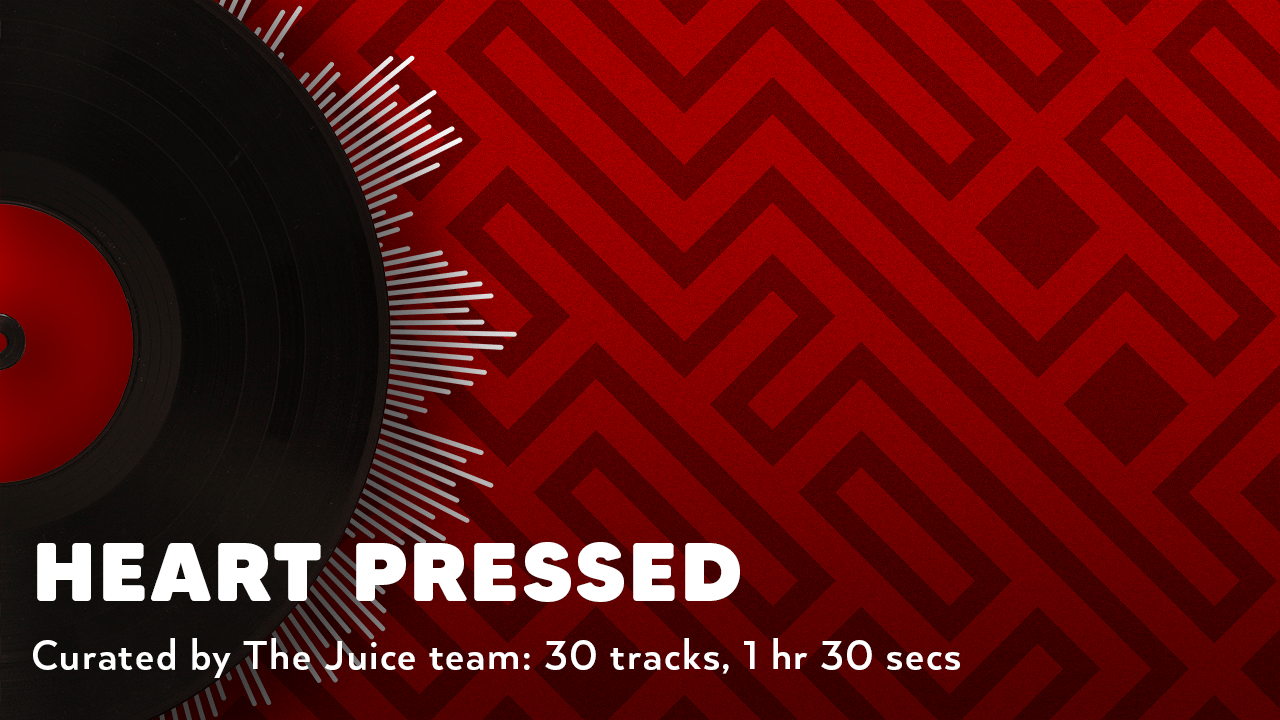
We are still in love o. So you, yes you, open your heart so somebody’s son or daughter can love you. You can start the process by listening to our playlist, guaranteed to melt even the stony-hearted. |
Don’t forget to save, we update frequently. |
Interested in guest curating? Reply to our mail, thejuice@pulse.ng |
|
|
|
|
|
| |
|
|
|
|
|
| |
| |
THIS WEEK’S POLL |
What was Chimamanda's first novel? |
|
|
|
|
|
| |
|
|
|
FRESH STATS |
2000 The African continent has over 2,000 languages, more linguistic diversity than any other region on earth. |
|
|
|
|
|
Today’s email was brought to you by Shalom Tewobola and Praise Okeoghene Vandeh. Editing by: Shalom Tewobola. Designs by: Daniel Banjoko |
|