|
|
|
| |
| |
👋 Good morning. In a land of economic trouble and a time of Tinubu, the destiny of a great kingdom rests on the shoulders of a young newsletter, and that newsletter is... You get the point. We are here again to talk money. Save it. Invest it. Stack it. Whether you're earning ₦50k or ₦800k, the habit is the same. |
This week - a candid conversation with a finance influencer, an 800k-earning product designer who lives with his parents and somehow still goes broke by the 25th, a savings hack worth bookmarking, and trivia. |
Let’s get right into it. |
If you’re enjoying this, don’t forget to subscribe and join The Juice community. We’re building this together ♡. |
 |
Shalom Tewobola,
Editor.
|
|
|
|
|
| |
|
|
|
| |
| |
Share with us |
What’s that one time you know in your spirit that you completely wasted money? And even worse, money that could have been put to better use. Reply to this email or reach us here. We're featuring the most relatable ones next week! |
|
|
|
| |
|
|
|
| |
| |
THE STACK |
|
|
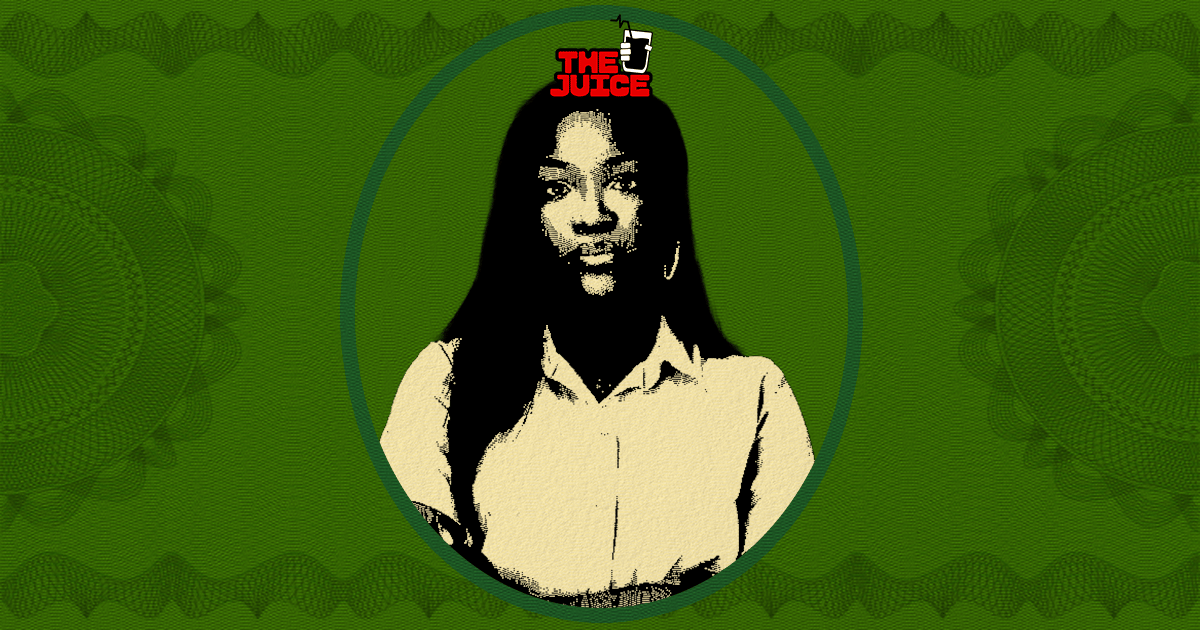
Oluchuwu Chiadika is everybody’s favourite finance girl |
Oluchukwu Chiadika, known in the finance space as Personal Finance Girl, has built a name for herself teaching people how to understand better and manage their money. |
With over 60k followers on Instagram and a recognition for spearheading community savings of N560M, Chiadika has earned herself a star on the finance walk of fame. From courses to ebooks and practical resources, she has created a body of work that reflects both knowledge and lived experience. |
A lack of financial knowledge set off her career path. She was already making money and saving, but wanted to start investing and didn’t quite know how to go about it. |
In trying to figure things out for herself, reading, learning, and filling in the gaps that local resources didn’t cover, she began sharing what she was discovering along the way. |
We sat with her to discuss her journey so far, the lessons she’s learnt serving as everybody’s favourite finance girl, and how Nigerians can stack their finances in a dwindling economy. |
What inspired you to start educating people about personal finance? |
I’ll say my personal experience made me start talking about money. I was making money and saving money, but when I decided to start investing, that was when there was a problem. |
I had to read articles and books that were not local to be able to find answers. So yeah, my mistakes made me start talking about money so that more people like me would not have to make the same mistakes. |
Since you started, what have you discovered about how people handle money in Nigeria? |
Nigerians are hard-working people, but most people end up spending as they earn. A lot of people are living hand to mouth. Many try to save, but a lot more end up falling for the wrong investments. |
It’s not that people aren’t hard-working; it’s just that we don’t have enough education around money. People don’t always know what to do to maintain their lifestyle or avoid being financially stressed all the time. |
How has your journey as a finance educator shaped your own approach to money? |
It has given me more accountability. I’ve been good with money for as long as I can remember, saving, making money, and budgeting. |
But working with high-net-worth individuals and students who don’t have a lot has made me realise that I’m on the right path. |
And for the times I feel like I want to drop the ball, I remember that I have to stay accountable to my audience. |
How do you think young Nigerians can start “stacking” their money effectively in today’s economy? |
To start your finances, you first need to know how much you spend. Everybody needs to know how much it costs to be themselves. |
Before you start thinking about stacking in this economy, you need to understand yourself, your finances, your expenses, and all of that. |
That way, you can plan accordingly: plan for hangouts, going out, enjoyment, and also serious things like rent. Once you understand yourself, you can plan effectively. |
If your salary is not enough, then you know you need to make more money. If it should be enough, then you know you need to cut your coat according to your material. |
If you could describe your journey in one sentence, what would it be? |
Adventurous. |
|
|
|
| |
|
|
|
| |
| |
BAG CHECK |
|
|
How a product designer earning 800k lives in Lagos |
John Babalola is a 25-year-old Product Designer based in Ogba, Lagos. His day-to-day life is shaped by careful budgeting, family responsibilities, and the everyday costs of living in the city. |
In this conversation, he breaks down how his monthly income moves through different parts of his life, from family support and savings to daily expenses and social spending. |
What emerges is a closer look at the balancing act behind a fixed salary in a city where even well-planned budgets rarely stay untouched. |
What actually lands in your account at the end of the month, and what do you do for a living? |
800K–1M, depending on projects from that month. I’m a Product Designer. |
What does the money have to cover before you even think about anything else—rent, transport, family, loans? |
It’s usually savings or black tax. |
Talk to me about day-to-day spending, food, data, electricity. What does just existing cost you in a month? |
Transport is about 15–20k. I Uber once or twice a week. Food or groceries is about 15k weekly; I either order groceries or a meal once a week. |
Data is 30k monthly, and electricity is about 15k weekly. |
I also spend around 10k weekly on lunches with my girlfriend or for her once or twice weekly. I send money to my siblings weekly, about 15–20k between them both. The rest goes to savings or big home expenses. |
What’s something you spend money on that you'd low-key hesitate to tell your mum, and how much does your social life actually run you? |
Probably dinner dates when I have them. It’s usually 80 to 100k each time. |
I also spend on event tickets and small lunches with friends fairly often, probably every week, but I’ve never really thought of it as something that weighs on my finances. |
Are you saving anything at all, or is it more like “let’s just get through this month”? |
I try to save most months. Sometimes it’s as little as 50k, sometimes up to 200–300k. |
But most times, it’s my savings that come back to save me the next month, or an unplanned expense interrupts it. So it goes back and forth like that. |
Be honest, by the 25th, where are you? And is this salary actually enough for the life you're living? |
By the 25th, I’m already in the dumps; I can’t lie. Sometimes, even a week or two earlier, especially if I saved a lot that month. If Spotify mistakenly debits me, I’m done. |
I’m strict with savings, so I don’t usually touch it unless it’s a real emergency. But honestly, the salary is not enough for the life I’m living. |
Black tax is a big part of it. I could have money set aside, and a sibling calls with an urgent need, like 200k for school fees that can’t wait. Because my budget is so tightly planned, one thing like that can scatter everything eventually. |
|
|
|
| |
|
|
|
| |
| |
Saving Hack |
Save with purpose. You can’t just say you want to save money without having a purpose for it. When you have a defined goal, you’re able to prioritise your savings. |
For example, if you want to buy an iPhone 17 Pro Max, when money comes in, you’ll prioritise that goal. So it’s about having a clear title for what you’re saving for and making sure you prioritise it. |
|
|
|
| |
|
|
| |
| |
QUICK POLL |
Who coined the word Naira? |
|
|
|
|
|
| |
|
|
|
|
|
|
Today’s email was brought to you by Praise Okeoghene Vandeh and Shalom Tewobola. Editing by: Shalom Tewobola. Designs by: Daniel Banjoko |
|